A pool table is often one of the largest and most valuable pieces of furniture in the home, yet it is easy to treat it like a purely recreational item. The right pool table cover selection guide starts with a different view: protect the playing surface, protect the rails and finish, and decide whether the table could serve your family in more ways between games.
A lightweight dust cover can keep debris off the felt. A custom hard-top cover can turn the same table into usable space for holiday meals, puzzles, card games, homework, and family gatherings. The best choice depends on how you use the room, who uses the table, and how much protection your investment needs.
Start With the Job Your Cover Needs to Do
Before comparing materials or thicknesses, be clear about what happens around your pool table. A table in a dedicated game room with adult players may only need protection from dust, sunlight, and the occasional spill. A table near a family room, kitchen, or entertaining area usually faces more risk: children climbing nearby, drinks set down during game day, serving dishes during holidays, and everyday traffic around the rails.
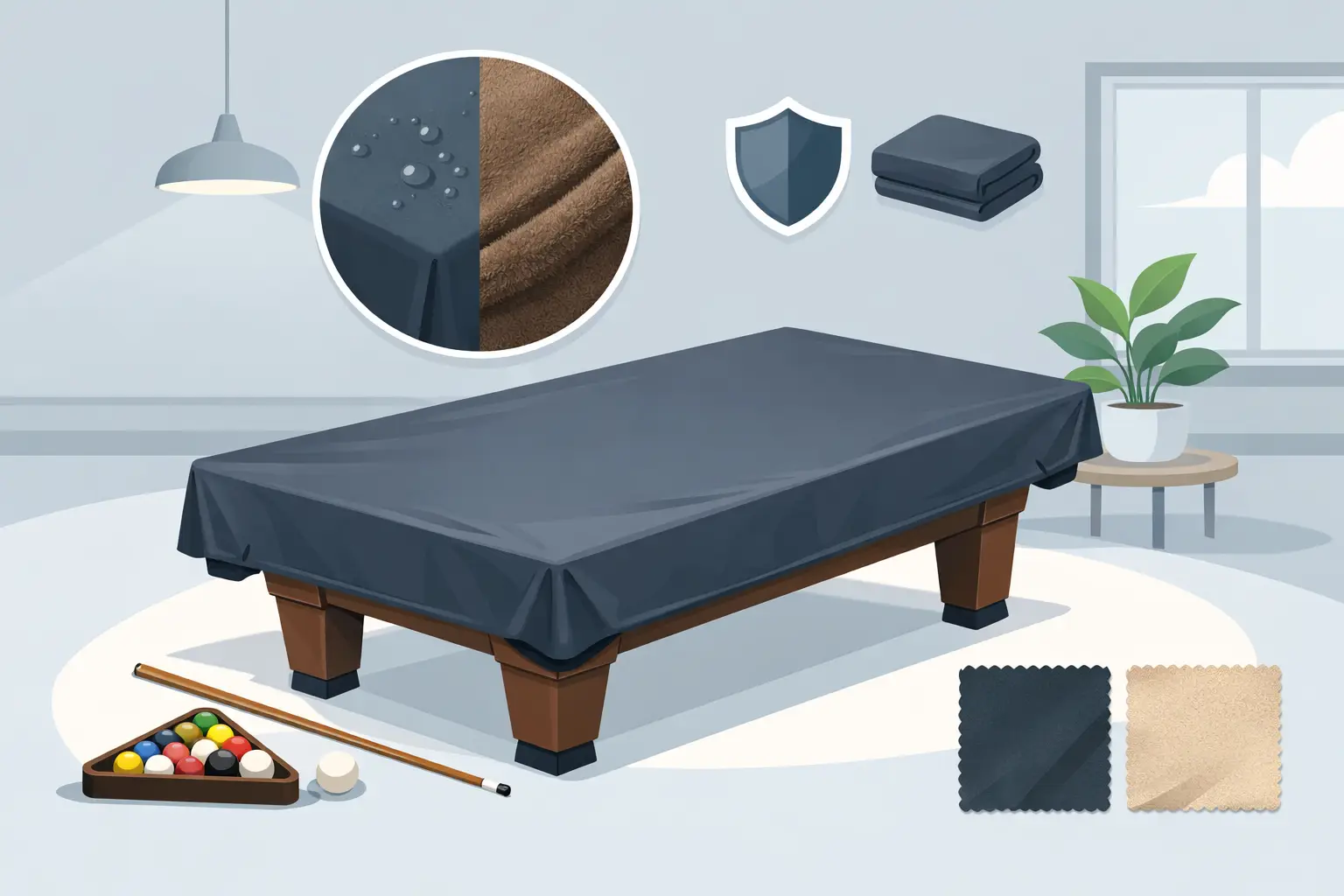
A soft cover and a hard-top cover solve different problems. A soft cover is primarily a barrier against dust, pet hair, and light exposure. It can be easy to put on and remove, but it does not create a stable surface or offer meaningful protection from a dropped object, a serving tray, or the weight of people leaning across the table.
A hard-top pool table cover is built for homeowners who want more substantial protection and more use from the room. It covers the playing bed with rigid, padded sections that help shield the felt, rails, and table structure while providing a firm top surface. If your pool table regularly sits unused between games, this added function can be the deciding factor.
Pool Table Cover Selection Guide: Measure for a True Fit
A cover that is merely close in size can shift, leave vulnerable edges exposed, or sit unevenly on the rails. Custom sizing matters because pool tables vary considerably, even among tables described as the same nominal size. Rail width, pocket design, outside dimensions, and corner details all affect the fit.
Measure the outside length and width of the table at its widest points, including the rails. Do not rely only on the playing-field measurement or assume that an 8-foot table has identical exterior dimensions to every other 8-foot table. Measure carefully, write the numbers down, and verify them before ordering.
It also helps to consider the rail profile. Some tables have broad, flat rails, while others have more decorative or contoured edges. A properly made hard-top cover should rest securely without creating pressure points that could mark the finish over time. If you have an unusual table shape, ornate woodwork, or oversized rails, direct customer support is worth using before production begins.
For a table that will double as an entertaining surface, think beyond the footprint. Leave adequate clearance around the table for chairs and guests. A cover may create a generous dining or buffet surface, but the room still needs enough space for people to sit, serve, and move comfortably.
Choose Protection Based on Real Household Use
The material and construction of a cover should reflect the protection level you expect. If the cover will only be used occasionally, a basic option may be sufficient. If it will support family meals, board games, or frequent entertaining, look for a hard-top design made to carry normal tabletop use without flexing or feeling makeshift.
Thickness is one of the practical details that separates a substantial cover from a thin panel. Heavier padded construction helps guard against dents and impacts, while a finished top provides a usable work and dining surface. Products built with 5/8-inch or 7/8-inch thickness offer more confidence when the table is being used for activities beyond billiards. The right thickness depends on the size of the table, the span being covered, and the type of use you have in mind.
Heat resistance also deserves attention if the covered table will be used for meals. A hot serving dish can leave a permanent mark on wood or a finished surface in seconds. Protective products rated for heat up to 550°F are designed to give homeowners more freedom when serving dinner, provided normal care is still used. A trivet remains a good habit for very hot cookware and for any surface where prolonged heat could be a concern.
The finish matters, too. A quality cover should look appropriate in a furnished room rather than like temporary equipment stored over a game table. At the same time, appearance should not take priority over function. A thin, attractive cover that shifts or offers little impact resistance will not provide the long-term protection most homeowners expect.
Think About Conversion, Not Just Coverage
The most useful hard-top covers do more than hide a pool table. They help a household make better use of square footage. In a home where a separate dining room is rarely used, a covered pool table can become the natural center for a large Thanksgiving meal, a birthday party, or a weekend card game.
This conversion works especially well for families who need extra seating during holidays. Instead of rearranging furniture or renting tables, the pool table becomes an additional dining surface already located where guests gather. It can also be a sensible choice for hosts who want a buffet area, a place for desserts, or a dedicated kids' table during a celebration.
There are trade-offs. A hard-top cover is more substantial than a fabric cover, so it takes more planning to lift, remove, and store. Larger tables may require two people to handle the sections safely. Folding or sectional construction can make storage more manageable, but you should still decide where the cover will live when the table is in play.
Measure the available storage area before you order. A cover stored carelessly against a damp wall, in a crowded garage, or under heavy items may be damaged before it has a chance to protect your table. A dedicated storage bag or a clean, dry closet space helps preserve the cover's finish and makes it easier to bring out when company arrives.
Do Not Overlook Daily Handling and Care
A cover should be practical enough that you will actually use it. If installation feels difficult or storage is inconvenient, it may remain off the table during the very occasions when protection is needed most. Ask how the cover sections are arranged, how they are moved, and whether one person can reasonably handle them.
Keep the table and cover clean before placing the panels down. Small grit, crumbs, or hard objects trapped between surfaces can create scratches or pressure marks. Wipe spills promptly from the cover rather than allowing moisture to sit, and avoid dragging heavy centerpieces, cookware, or boxes across the top.
When removing the cover, lift instead of sliding whenever possible. Sliding can scuff rails or catch at corners, particularly on finished wood tables. This is a small habit, but it helps protect both the pool table and the cover through years of family use.
Look for Craftsmanship You Can Reach
A custom cover is not a disposable accessory. It is a protective product made for a significant piece of furniture, and the manufacturer should be ready to answer questions about measurements, materials, handling, and fit. American-made, hand-built construction gives homeowners a clearer path to that support and to a product made for their exact table rather than a generic approximation.
Heartland Table Pads builds custom protective products for homeowners who want to preserve the tables that bring family and friends together. That perspective matters when a pool table is both a game table and part of the home where memories are made.
Choose a cover that fits the way your household gathers. When the felt is protected, the wood is shielded, and the table can serve a meal as confidently as it hosts a game, you get more enjoyment from the room you already have.