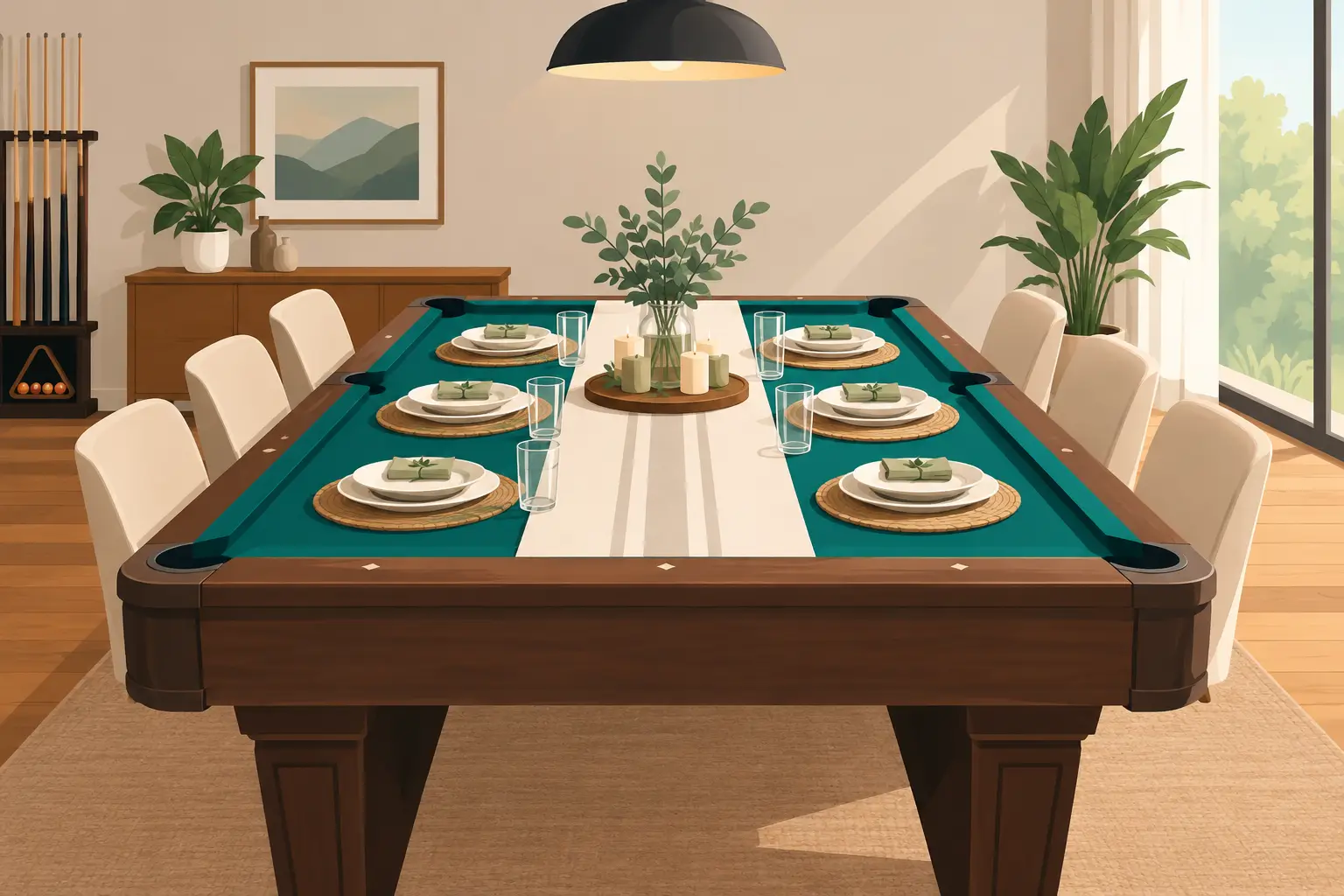
A pool table can be one of the largest, strongest pieces of furniture in the house, yet it often sits unused when the dining room is full. This pool table dinner setup guide explains how to turn that space into a practical table for holidays, birthdays, game-day meals, and big family gatherings without putting the cloth, rails, or slate at risk.
The key is not simply laying a board across the table. A proper setup needs a stable hard-top cover, a clean and level surface, and enough room for guests to sit comfortably. When those details are handled well, a pool table becomes a useful extension of the home while remaining protected for the next rack of balls.
Start With a Proper Pool Table Hard-Top Cover
The playing surface should never carry the weight of dinnerware, serving dishes, elbows, or centerpieces directly. Even a light meal can leave chalk dust, food residue, moisture, or impressions in the cloth. A misplaced hot dish can create a much more expensive problem.
A fitted hard-top cover creates the foundation for a dinner setup. It should rest securely on the table’s rails and distribute weight evenly rather than pressing down on the felt. The cover also needs to be rigid enough that plates and glasses stay level, especially near the edges.
A pool table is not built like a dining table. Its slate bed is supported by the frame, while the rails and cushions are designed for play. Using loose plywood, folding banquet tables, or an undersized tabletop can shift during a meal, scratch the finish, or leave guests feeling as though they need to balance every glass. A purpose-built cover is the safer choice for both the table and the people gathered around it.
For homeowners who use the space often, a custom-made cover is worth considering. A fitted design accounts for the exact outside dimensions of the pool table, including the rail width, so the dining surface has a clean, dependable fit instead of an improvised look.
Measure the Room Before You Set the Table
A dinner setup only works if guests can get in and out of their chairs without bumping walls, cabinets, or one another. Measure the full outside dimensions of the covered pool table, then consider the aisle space around it. Most households should aim for at least 30 inches behind each chair, with more room where people will be walking or carrying dishes.
This is where the trade-off becomes clear. A standard 8-foot pool table can create an excellent buffet or dining surface, but a narrow recreation room may not comfortably seat people on all four sides. In a tighter room, use the long sides for seating and reserve the ends for serving dishes, drinks, or children who need less elbow room.
Before a holiday meal, place a few dining chairs around the covered table and test the layout. Open doors, walk from the kitchen, and make sure a guest can rise from a chair without forcing everyone nearby to move. Five minutes of planning can prevent a crowded, frustrating meal.
Choose Chairs That Fit the Table Height
Pool tables are generally close to standard dining-table height once covered, but the final height depends on the table and the cover thickness. Check the measurement from the floor to the finished top surface before selecting chairs. Standard dining chairs usually work well when the seat sits roughly 10 to 12 inches below the tabletop.
Avoid tall bar stools unless the finished surface is unusually high. They can feel unstable and make it harder for children, older relatives, and guests in formal clothing to sit comfortably. A family dinner should feel welcoming, not like a balancing act.
Build a Protected, Food-Ready Surface
Once the hard-top cover is in place, treat it as the base layer, not the only layer. Add a tablecloth, runner, placemats, or a fitted dining pad depending on the occasion. This helps protect the cover from spills and gives the converted table the finished appearance of a true dining space.
For everyday pizza night or a card-game meal, a washable tablecloth may be all that is needed. For Thanksgiving, Christmas dinner, or a celebration with serving platters, add more protection between hot dishes and the surface. Trivets and insulated pads are still wise, even when using materials designed to resist heat.
Heartland Table Pads offers American-made protective products with heat protection up to 550°F, along with substantial 5/8-inch and 7/8-inch pad options for households that regularly host meals and celebrations. The right protection depends on how the table will be used. A formal meal with hot serving pieces calls for more than a casual snack setup.
Keep drinks on coasters and place pitchers, gravy boats, and ice buckets on a tray. Condensation and small spills are easy to overlook during a busy gathering, but moisture can work its way into seams or under an unprotected cloth. A tray also makes clearing the table much easier when the meal is over.
Plan the Table Setting Around Stability
A pool table conversion gives you plenty of surface area, which can lead hosts to overfill it. Leave room between place settings, serving bowls, and centerpieces. The table may be large, but guests still need space to pass food and set down a drink without reaching over candles or stacked platters.
Keep tall centerpieces low or narrow enough for people to see across the table. If the meal is served family-style, place heavier dishes near the center where the surface is most stable and easiest for everyone to reach. Use the ends for bread baskets, napkins, or lighter items.
A buffet arrangement may be better for larger groups. Set the covered pool table with food and drinks, then let guests eat at the dining table, kitchen island, or smaller folding tables nearby. This approach reduces crowding and allows the pool table to handle the job it does especially well: providing a generous, protected serving surface.
Be Careful With Candles and Heat
Open flames deserve extra attention around a covered pool table. Candles can tip, wax can drip, and a flame left too close to a fabric tablecloth is never a good idea. Battery-operated candles offer the same warm look for many occasions without the risk.
Hot cookware should not go directly from the oven to the tabletop. Use trivets, insulated pads, or a serving board. The goal is to protect every layer - the tablecloth, the cover, the pool table finish, and the investment underneath.
Keep the Setup Secure Through the Meal
Before guests arrive, gently press on several areas of the finished surface. It should not rock, slide, bow, or separate at a seam. Check that each cover section is properly aligned and that no edge extends so far that it can be caught by a chair, sleeve, or passing guest.
Children should be reminded that the converted table is for dining, not climbing or leaning. A pool table is heavy, but a temporary tabletop system is not designed for someone to sit on the edge. This is particularly important during lively holiday gatherings, when children naturally gather where the activity is.
If drinks will be served, consider setting up a separate beverage station. It keeps traffic moving, limits spills around the dinner table, and gives guests a place to refill without reaching across plates. Small choices like this protect the setup while making the evening easier for the host.
Clear and Store It With Care
After the meal, remove dishes, crumbs, and moisture before lifting the tablecloth or protective layers. Do not drag heavy serving pieces across the surface while clearing. Wipe the cover according to its care instructions, and make certain it is dry before folding or storing it.
When removing a multi-piece hard-top cover, lift each section rather than sliding it over the rails. Sliding can rub the finish or catch on hardware. Store cover sections flat when possible, or use a storage solution designed to keep them clean, supported, and ready for the next occasion.
A well-planned pool table dinner setup does more than solve a seating problem. It gives a busy household another place to gather, share a meal, and make room for the people who matter - while preserving the game table that brings everyone together afterward.