
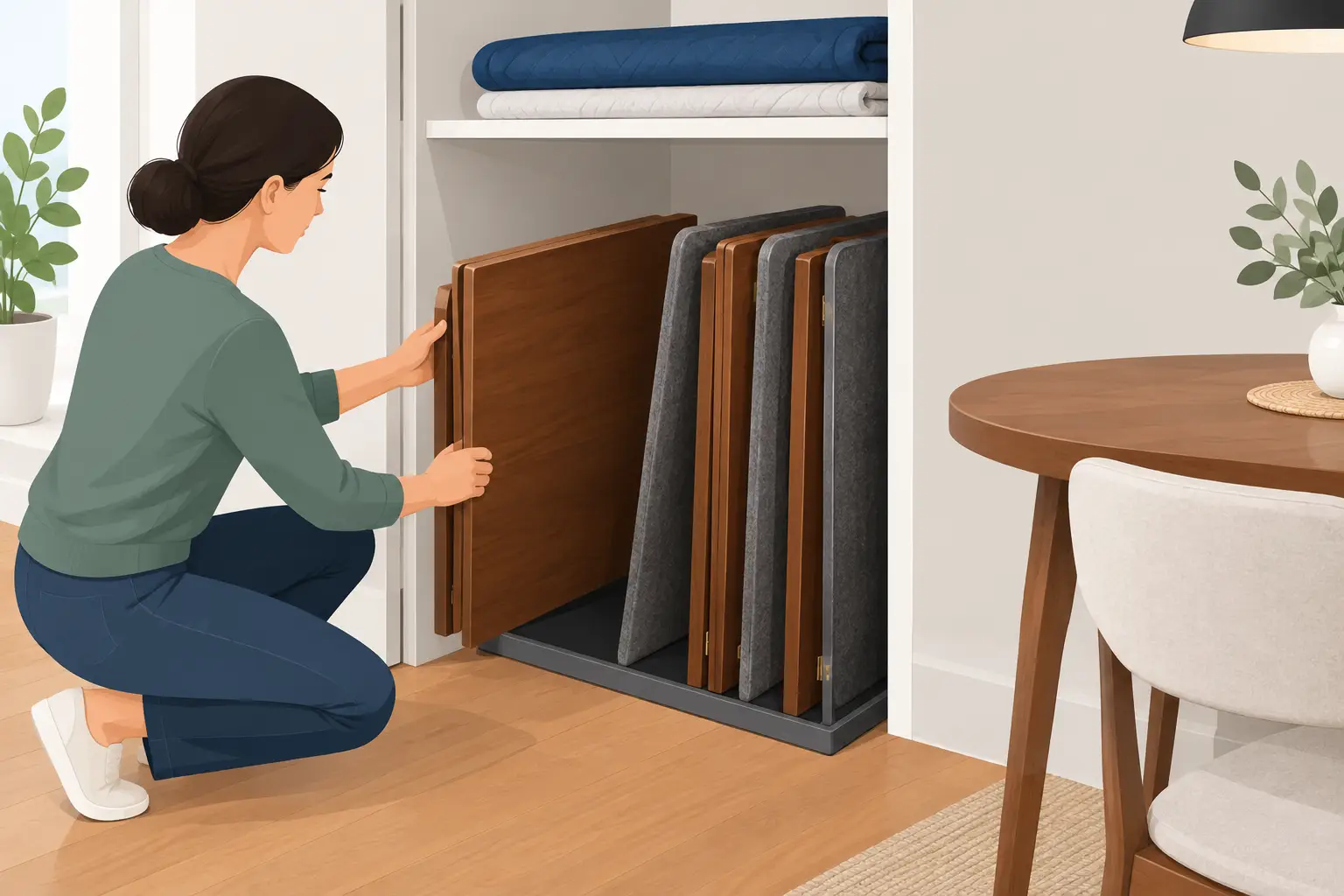
A table leaf may spend most of the year out of sight, but it should never be out of mind. The extra leaves that make room for holiday dinners, birthday parties, and visiting family are often the first pieces damaged by a rushed storage decision. Learning how to store table leaves correctly helps protect the wood, finish, edges, and alignment hardware so your table is ready when the next gathering calls for more seats.
How to Store Table Leaves Safely
The best place for most table leaves is flat, clean, dry, and fully supported. A closet shelf, the top of a sturdy cabinet, or a dedicated storage area under a bed can work well if the leaf is not crowded, bent, or exposed to changing temperatures.
Avoid leaning a leaf against a wall for long periods. This is a common storage shortcut, especially in garages and basements, but it places uneven stress on the panel. Over time, gravity can contribute to bowing or warping, particularly with wide leaves, solid wood construction, or thinner veneer surfaces.
If flat storage is not possible, store the leaf upright only in a purpose-built rack that supports it evenly and prevents it from tipping. Keep it vertical rather than slanted, and make sure it cannot rub against concrete, tools, furniture legs, or other hard objects. Vertical storage can be practical for a smaller leaf, but flat storage remains the safer choice for many fine dining tables.
Give Every Leaf Full Support
A leaf should rest on a level surface that supports its entire length and width. Do not place it across two narrow rails, on a single shelf board, or on a surface that allows the center to sag. Even a slight dip can matter when a leaf sits in the same position for months.
When storing more than one leaf, place a clean protective layer between them. Soft cotton cloth, clean felt, or a purpose-made storage bag can prevent the finished surfaces from rubbing together. Keep the leaves stacked squarely, with the largest and heaviest leaf on the bottom. Do not stack boxes, holiday decorations, or other household items on top.
The goal is simple: a table leaf should be supported as carefully in storage as it is when installed in the table.
Choose a Stable Storage Environment
Wood expands and contracts as humidity changes. Extreme heat, dampness, and rapid temperature swings can affect both solid wood and veneered table leaves. A finished leaf may look protected, but the materials beneath the finish still respond to the environment around them.
An interior closet, climate-controlled spare room, or dry storage cabinet is usually a better choice than an attic, unfinished basement, garage, shed, or storage unit without climate control. Attics can become excessively hot in summer, while garages and basements may experience damp air, cold winters, and quick seasonal shifts.
A comfortable household environment is generally the right environment for fine furniture. If a space feels too humid, too cold, or too hot for family belongings, it is probably not the best place for a table leaf. Keep leaves away from water pipes, exterior walls that sweat with condensation, heating vents, and direct sunlight.
If basement storage is the only available option, elevate the leaves above the floor on a sturdy shelf or platform. Concrete can transfer moisture, and a small plumbing leak can cause lasting damage before it is noticed.
Keep the Leaf Clean and Completely Dry
Before putting a leaf away, wipe it gently with a clean, dry, soft cloth. Food residue, moisture rings, fingerprints, and dust can become harder to remove after months in storage. If the leaf was used for a meal, allow it to dry completely before covering it.
Do not wrap a damp leaf in plastic. Plastic can trap moisture against the finish, especially in a humid room. That trapped moisture may lead to clouding, finish damage, or mildew on the protective material. A breathable fabric cover offers a better balance of dust protection and airflow.
Pay special attention to the edges, where table leaves can be vulnerable to chips and finish wear. A cover should cushion those edges without binding tightly around them. For households that regularly change table configurations, a fitted storage bag keeps leaves protected, contained, and easier to carry without handling the finished surface unnecessarily.
Protect the Hardware and Finished Surface
Table leaves are more than wood panels. They may include alignment pins, metal clips, locks, aprons, and skirts that need protection as well. Before storage, check that alignment pins are clean and not bent. Avoid placing leaves face-down on rough surfaces where hardware can scratch the wood or snag fabric.
For leaves with metal pins or protruding components, add a soft layer between the leaf and any hard shelf surface. A padded storage bag or folded cotton blanket can provide useful protection, provided it is clean and dry. Never use printed paper, newspaper, cardboard with exposed staples, or packing materials that may transfer ink or leave impressions on the finish.
Be careful with furniture polish before storage. A heavy coat of polish can leave residue, attract dust, or create an uneven appearance when the leaf is brought back into use. If the manufacturer of your table recommends a particular furniture-care product, follow that guidance. Otherwise, gentle cleaning and dry storage are usually the most dependable approach.
Avoid the Storage Mistakes That Cause Damage
Most table-leaf damage comes from a few preventable mistakes: poor support, pressure from stored items, moisture exposure, and contact with abrasive surfaces. A leaf can also be damaged when it is squeezed behind furniture or used as a shelf for other belongings.
Never store a leaf directly on a garage floor, in the trunk of a car, or against a radiator. Do not place it beneath heavy boxes, exercise equipment, or folded chairs. Even if the finished surface appears fine at first, pressure can leave dents, create a permanent bow, or damage edge molding.
It is also wise to keep leaves away from strong odors and household chemicals. Paint, gasoline, cleaning solvents, and pest-control products can affect wood finishes or leave lingering odors in fabric covers. A dining table leaf belongs with your home furnishings, not with workshop supplies.
For antique tables and tables with highly figured veneers, climate control and flat support deserve even more attention. These pieces can be less forgiving of humidity changes and uneven pressure. When the table represents a significant family heirloom or financial investment, a dedicated protective storage solution is a practical safeguard rather than an extra expense.
Make Setup Easier for the Next Family Gathering
Good storage should protect the leaf and make it easy to use. Store leaves where two people can safely retrieve them without twisting, dragging, or bumping corners into door frames. If the leaf is large, avoid high shelves that require overhead lifting. The safest storage spot is one that is both stable and accessible.
When bringing a leaf back out, carry it from the sides with clean hands and, for larger leaves, use two people. Set it on a clean padded surface before installing it. Let a leaf stored in a cooler area adjust to your home's normal temperature before forcing it into the table. Wood movement is natural, and a leaf that seems tight immediately after storage may settle once it acclimates.
A well-made table deserves the same care whether it is set for an ordinary weeknight meal or a full house at Thanksgiving. Heartland Table Pads offers custom storage bags designed to help homeowners protect table leaves between the occasions that bring everyone back around the table.
Store the leaf flat, dry, supported, and protected, and it can remain a reliable part of your family's table for years of celebrations to come.